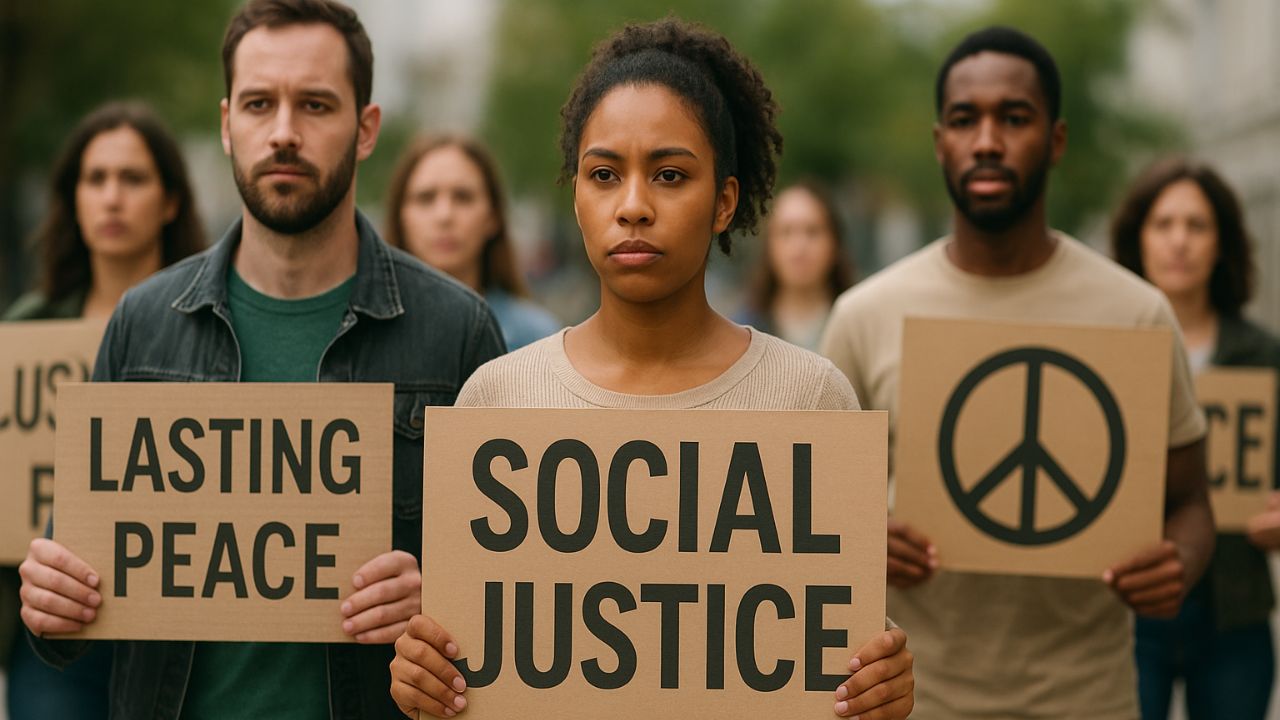
Social Justice and Lasting Peace – The Utah Forest Dynamics Plot (UFDP), accessible at http://ufdp.org, is a long-term research initiative that highlights the importance of studying ecological systems to understand their sustainability and resilience. While the project primarily focuses on forest ecosystems, its philosophy extends to a broader understanding of interconnectedness, responsibility, and equity—values that deeply resonate with the principles of social justice and peace. Just as forests thrive when every species has space and resources to coexist, human societies flourish when justice, fairness, and inclusivity are ensured. UFDP’s work reminds us that systems—whether natural or social—collapse when exploitation and inequality dominate. Lasting peace can only be achieved when communities are nurtured through fairness, shared responsibility, and respect for diversity. In this way, the lessons from ecological research serve as powerful metaphors for social structures, underlining how balance and justice form the foundation of sustainable and peaceful human existence.
Social Justice as the Foundation of Peace
Social justice is not just an ethical principle but a practical necessity for peacebuilding. When societies are plagued by inequality, exclusion, and systemic discrimination, unrest and conflict are almost inevitable. Social justice addresses the roots of these problems by ensuring equal opportunities, protecting rights, and dismantling structures of oppression. Just as in nature where ecosystems maintain balance through mutual support, human societies can only achieve harmony by recognizing the dignity and rights of all individuals. Social justice fosters trust, cooperation, and mutual respect among diverse groups, reducing the causes of violence and division. Without justice, peace remains fragile, superficial, and temporary. True, lasting peace requires not only the absence of war but also the presence of fairness in education, healthcare, economic opportunities, and political representation. Thus, social justice acts as the soil from which the tree of peace can grow strong and enduring.
Addressing Inequality to Prevent Conflict
Inequality is one of the greatest threats to peace. Societies divided by wealth gaps, racial discrimination, or lack of access to resources create environments ripe for resentment and conflict. When groups feel marginalized, unheard, or exploited, their frustrations can escalate into protests, civil unrest, or even war. Addressing inequality means actively creating systems where resources, opportunities, and power are shared more fairly. This includes economic reforms, inclusive policies, and social programs that uplift disadvantaged communities. For example, providing equal education access or healthcare opportunities can break cycles of poverty and exclusion, giving everyone a stake in peace. Moreover, reducing inequality strengthens trust in institutions and builds social cohesion, making societies more resilient against violence and instability. Just as forests collapse when resources are monopolized by a few species, societies too face decline when justice and equity are ignored. Therefore, addressing inequality is not optional—it is essential for preventing conflict and sustaining peace.
Building Inclusive Communities for Lasting Peace
Inclusivity is at the heart of both social justice and peacebuilding. A peaceful society is one in which everyone—regardless of gender, ethnicity, religion, or socioeconomic status—feels valued and included. Inclusion goes beyond tolerance; it requires active participation, dialogue, and representation of marginalized voices in decision-making processes. When communities embrace diversity and build systems that welcome everyone, they create strong foundations for unity and resilience. Inclusive communities also foster empathy, enabling people to see beyond their differences and recognize shared human aspirations. Education, interfaith dialogues, and cultural exchanges play a significant role in breaking down stereotypes and building mutual understanding. In this way, inclusion is not just a social ideal but a practical strategy for peace. Much like in an ecosystem where every species contributes to balance, societies thrive when all groups are integrated into the social fabric, ensuring that peace is built collectively and sustained across generations.
The Role of Global Cooperation in Achieving Justice and Peace
Lasting peace is not only a local or national concern but a global responsibility. In an interconnected world, injustice in one region often has ripple effects across borders, fueling migration crises, economic instability, or transnational conflicts. Global cooperation is therefore essential in addressing systemic issues such as poverty, climate change, and human rights violations. International organizations, peacekeeping missions, and cross-border collaborations provide platforms for dialogue, mediation, and the establishment of shared standards of justice. Furthermore, global solidarity fosters the exchange of knowledge, resources, and strategies to address common challenges. Just as ecological systems are interconnected, the peace of one community depends on the justice of another. True and lasting peace emerges when nations recognize their shared humanity and commit to building fairer, more compassionate systems worldwide. By working together, humanity can ensure that social justice is not a privilege for a few but a foundation for all, paving the way for a peaceful and sustainable future.